Planning the washrooms
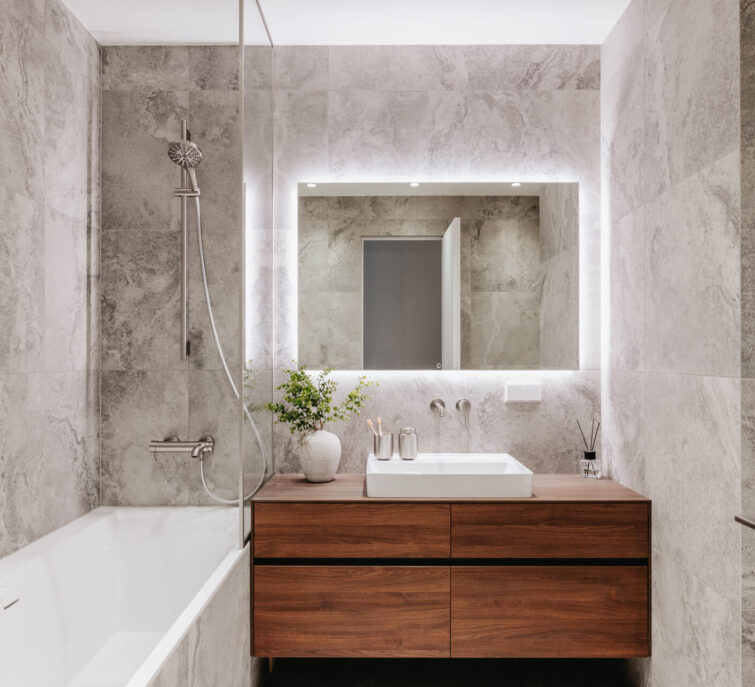
The washroom is a space that every family member frequently uses, so it is important that the solutions there are well thought out and functional. Homes with multiple washrooms are becoming increasingly popular in Estonia, and in Liveni’s layouts, almost all apartments with at least four rooms have two washrooms, ensuring that every family member feels comfortable in their home.
What should you keep in mind when planning the washrooms in your new home?
Bathtub or shower?
Depending on the number of washrooms and their users, the contents of each washroom may vary. Families with small children often value a bathtub, while for families with teenage children, it may be less important. Based on family members’ habits, a bathtub, a shower or both may be chosen. The best solution is likely to have both in the same room, but this is often not possible in city apartments. Consider your family’s needs and routines carefully.
Mirror height and selection
When planning the height of a washroom mirror, consider the height of the users. A mirror makes the space feel larger, so in particularly small washrooms, consider using the largest possible mirror.
If you want a mirror with lighting, check whether the mirror’s light has a cable connection and whether it can be switched from a wall switch or if you need to choose a mirror with a separate switch to control the light.
Mirror lighting plays an important role in its use. If you plan to do makeup or shave in front of the mirror, it’s worth choosing lighting that illuminates your face rather than casting light onto the wall. Many mirrors also have built-in defogging features, which is convenient because the mirror won’t become foggy when the room is humid.
Brushing teeth together
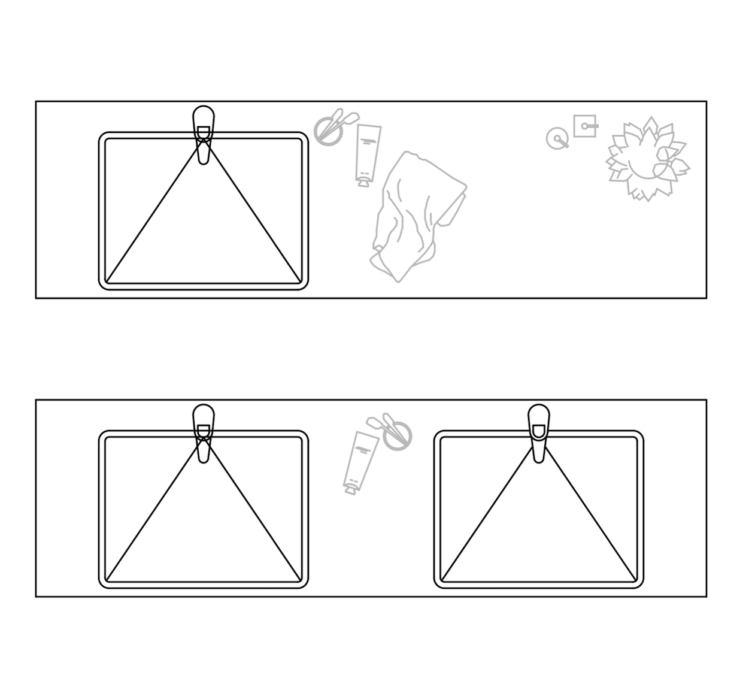
Two sinks side by side are ideal for some couples, but unacceptable for others. Often, the choice comes down to having two sinks or a larger countertop to store daily-use items or personal care products. At the same time, some people prefer to keep as few items as possible on the countertop and store them in drawers or in a cabinet behind the mirror.
Wet socks?
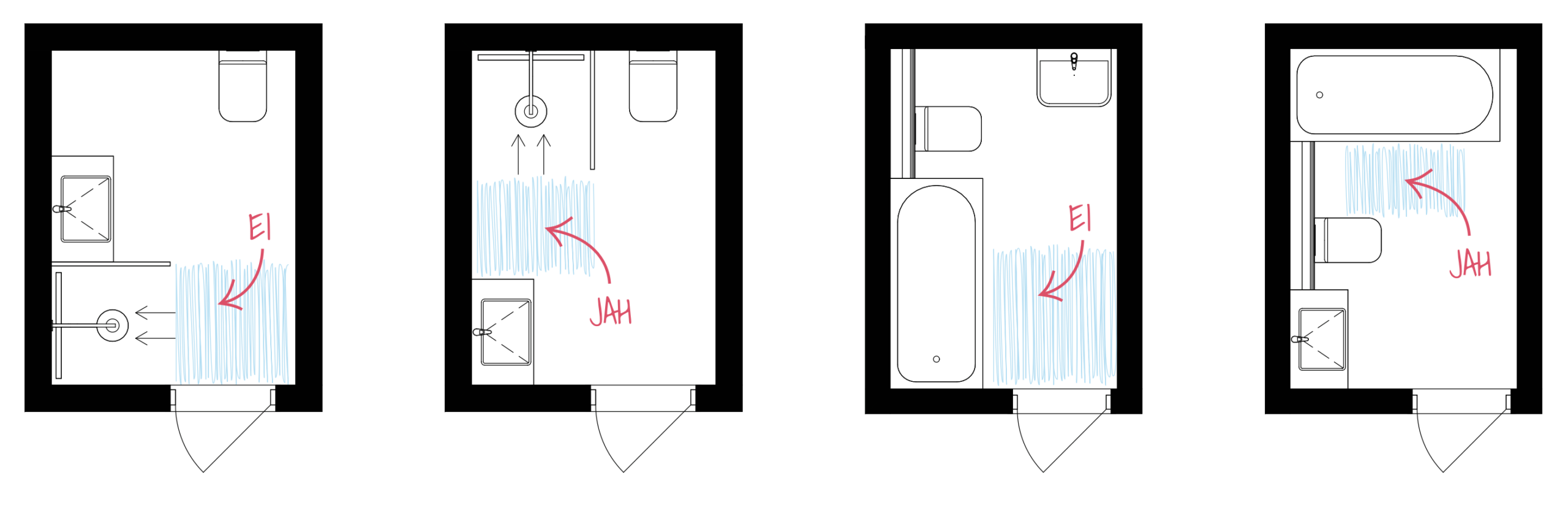
If someone has taken a shower before you, it can be quite unpleasant to accidentally step into a wet spot and get your socks wet. In a shower room, this area is referred to as the wet zone – the space that gets wet after using the shower or bathtub, because the person who just showered has not completely dried off. However, by planning the washroom layout correctly, it is possible to avoid stepping into this area with your socks on.
The trick is to plan the “wet zone” as far as possible from the sink and toilet. The simplest logic is that washing is the last function in the room, with the sink and/or toilet located near the door.
Recommendations for planning the washroom and the wet zone (marked in blue on the plan):
Bidet, handheld shower next to the toilet and Japanese toilet
When visiting Mediterranean countries, we often see bidets and in Japan, there are unique toilets with washing and drying functions. Today, such features are no longer considered a total luxury, but have become significantly more accessible in Europe and in Estonia as well.
In smaller spaces, it is more practical to choose a handheld shower next to the toilet or a Japanese toilet, as these already include the necessary functions and do not require extra space for additional elements.
It is worth remembering that a Japanese toilet requires an electrical connection and a shower, of course, needs a water connection, some space and in the case of a recessed installation, also a cover wall to accommodate the mixer inside the wall.
Electrical outlets
When planning a washroom, it is important to check the suitability of electrical outlet locations. Consider which hand you hold your hairdryer in and whether the outlet is on the correct side relative to the mixer and mirror. If you want an electric towel warmer, also plan for a suitable outlet or additional wiring. More affordable towel warmers generally come with a plug, while designer models require wiring that should be planned in advance for the specific location.
Idea: Why not add an outlet inside a cabinet? This way, you can charge your toothbrush, razor or other devices without them being visible. To do this, you need to decide early on which cabinets you plan to have in your washroom. This is why it’s good to plan a home as a whole – during the layout and electrical planning stages, make decisions about furniture placement as well.