Everything starts with planning
It is by no means an exaggeration to say that planning is the alpha and omega of a home. It is probably even more important than the number of square meters. What should you pay attention to when studying apartment layouts, and how can you design your future home “on paper”?
“What makes a good layout?” is a complex and rather subjective question. There are certain factors that should be taken into account, but the final solutions depend on the needs, wishes, and habits of the future residents.
When examining a home’s layout, look at it and consider the following:
- Which walls are load-bearing and where would changes be possible?
- Does the home have enough storage space for belongings (wardrobes in the hallway and rooms, a separate storage room and/or utility room)?
- Are the size and shape of the rooms suitable for the items that are important to you?
- Does the layout of the rooms allow you to host guests the way you would like?
- Is the living room a walk-through space or are the other rooms accessed via a corridor?
- Is the kitchen part of the living room or slightly separated? Could this be changed if desired?
- Is it possible to plan a kitchen island if you wish?
- Is there enough countertop workspace in the kitchen for your needs?
- Do corridors take up an unreasonably large portion of the apartment’s total area?
- Is a private bathroom connected to the master bedroom important to you?
- Is there a separate WC in a larger apartment?
- Do doors obstruct each other when opened at the same time?
- Does the movement of the sun throughout the day match your preferences?
In addition to personal preferences, when planning a home, attention should be paid to the following aspects:
Walk-through or separately located living room
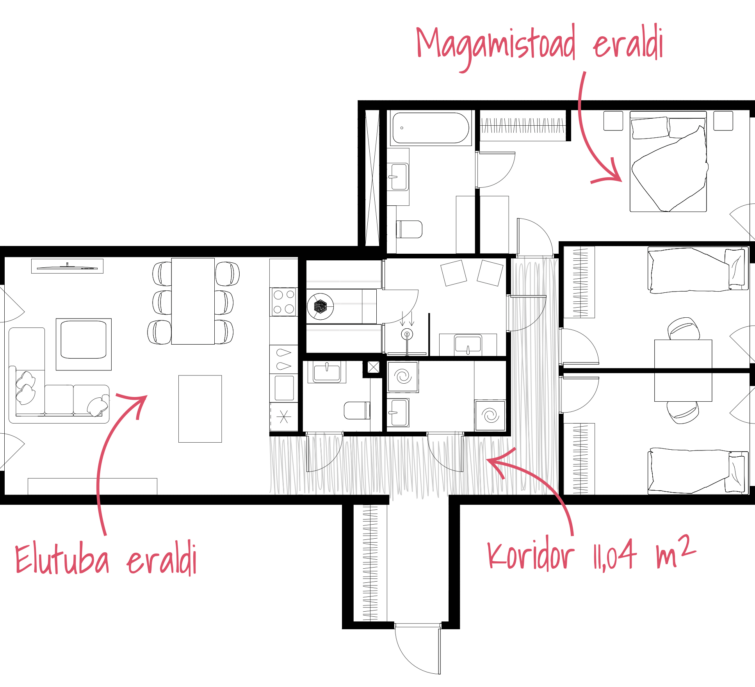
People’s preferences vary depending on their previous experiences and lifestyle: some want the bedrooms to be definitely away from the living room, while others feel that the corridor takes up square meters that could instead be part of the living room. For this reason, Liven has designed both layout options and depending on the building’s shape, creates different homes in various locations.
Depending on the children’s ages, their rooms may be desired closer to or farther from the parents’ bedroom. Since children grow up quickly, we believe it is better to consider future needs.
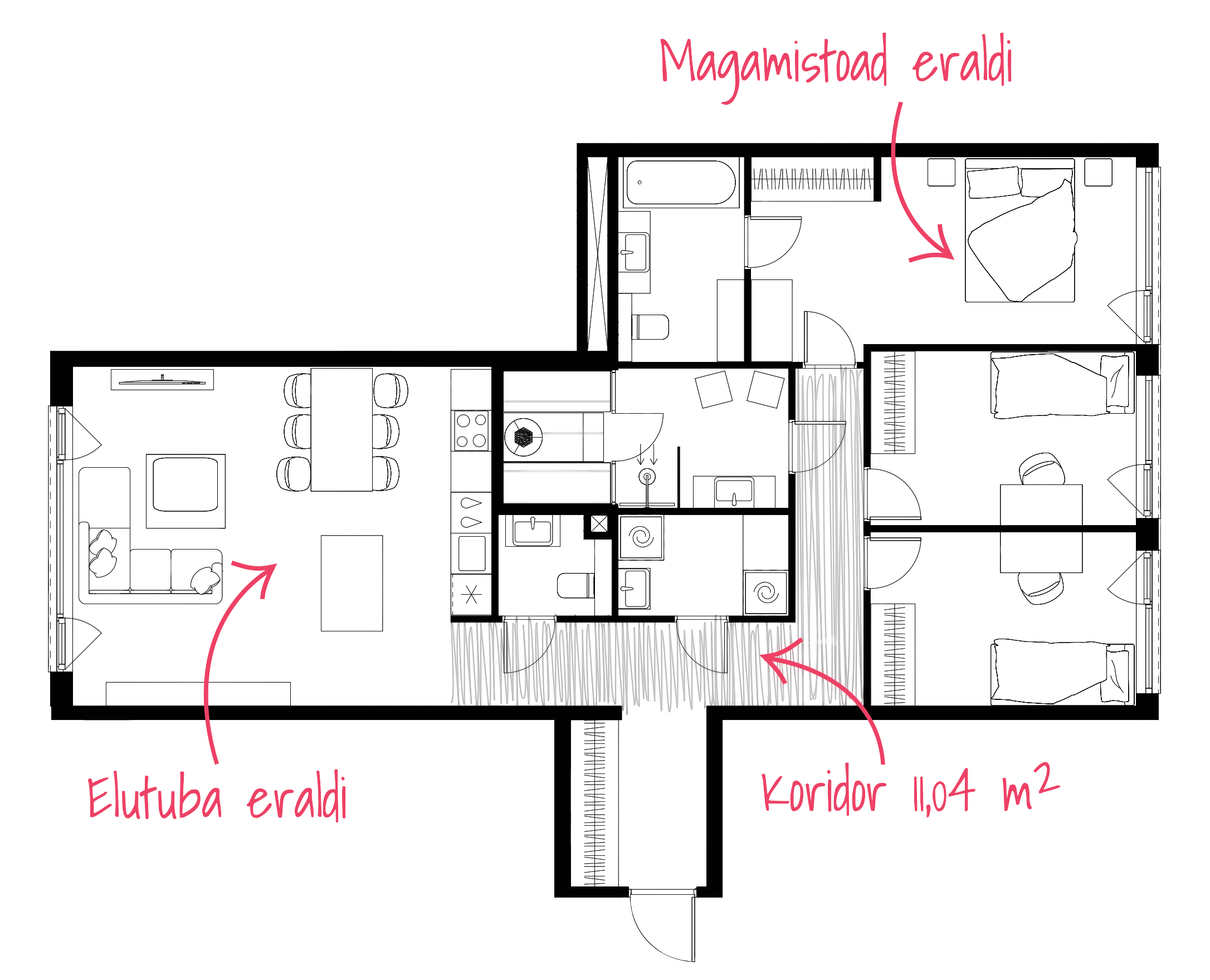
Example of an apartment where the bedrooms are separate from the living room. This part of the apartment can be separated with a door to achieve additional sound insulation.
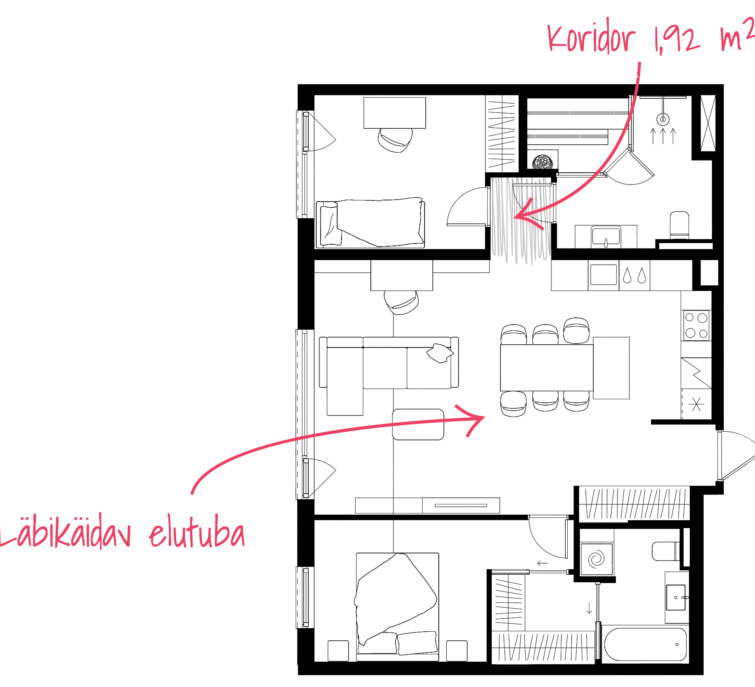
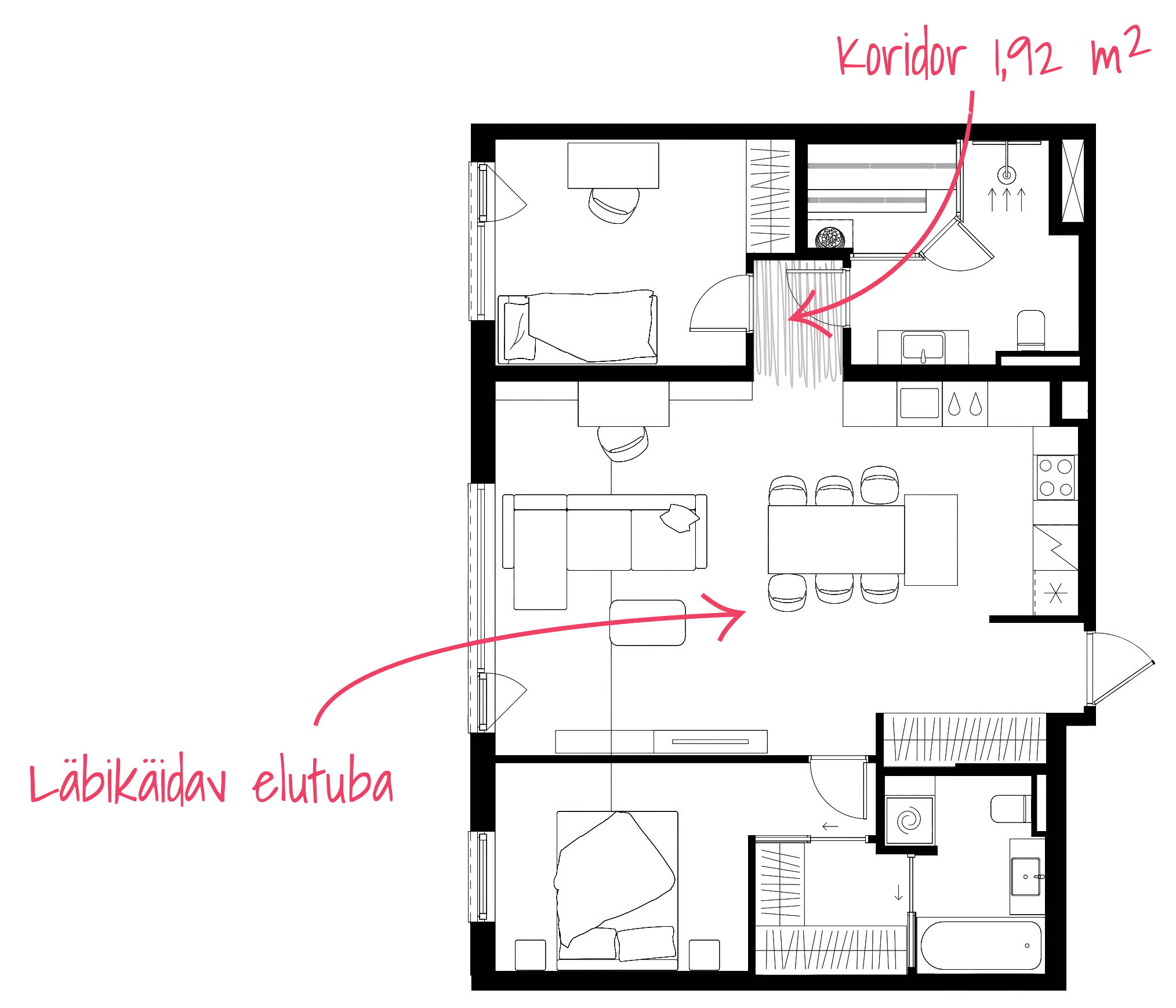
Example of an apartment with a walk-through living room, where as much floor space as possible is dedicated to the living and dining area. In such a home, corridor space is kept to a minimum, but one must consider that movement through the living room is required.

The “black zone” in the hallway and passing through it
The hallway has a so-called “black zone,” where dirt and moisture from outside accumulate. Walking through it can dirty your shoes, spreading dirt throughout the apartment. Therefore, it is good if there is a small area in the hallway that you pass through only when entering or leaving. In some layouts, for example, the toilet is located in the hallway, and to avoid constantly stepping into the black zone, it is enough to adjust the way the door opens.
Door handles and opening directions
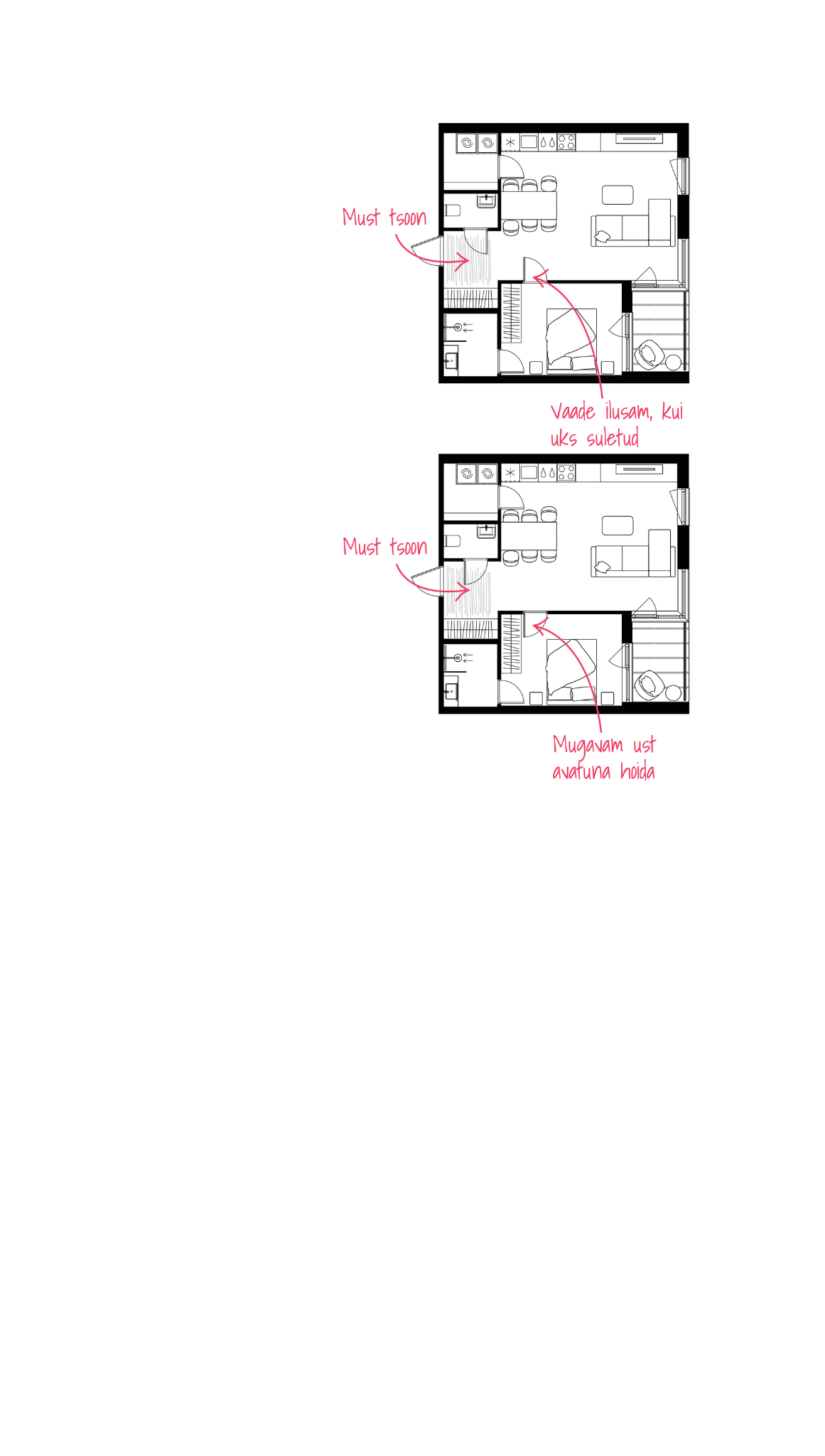
The convenience of moving around at home can often depend simply on how doors open. For example, the door to a utility room could open outward, leaving more space for placing items. Since this door is not used very frequently, opening it into the room should not be very disruptive. It is also not a door that stays open. On the other hand, doors to children’s rooms are generally better to open inward, toward the wall: if the room door is constantly open, it won’t obstruct the walkway.
Example of door opening direction. In the first case, from the living room view, it looks better if the door is closed. In the second case, it is convenient to keep the door open, as it does not obstruct or catch the eye.
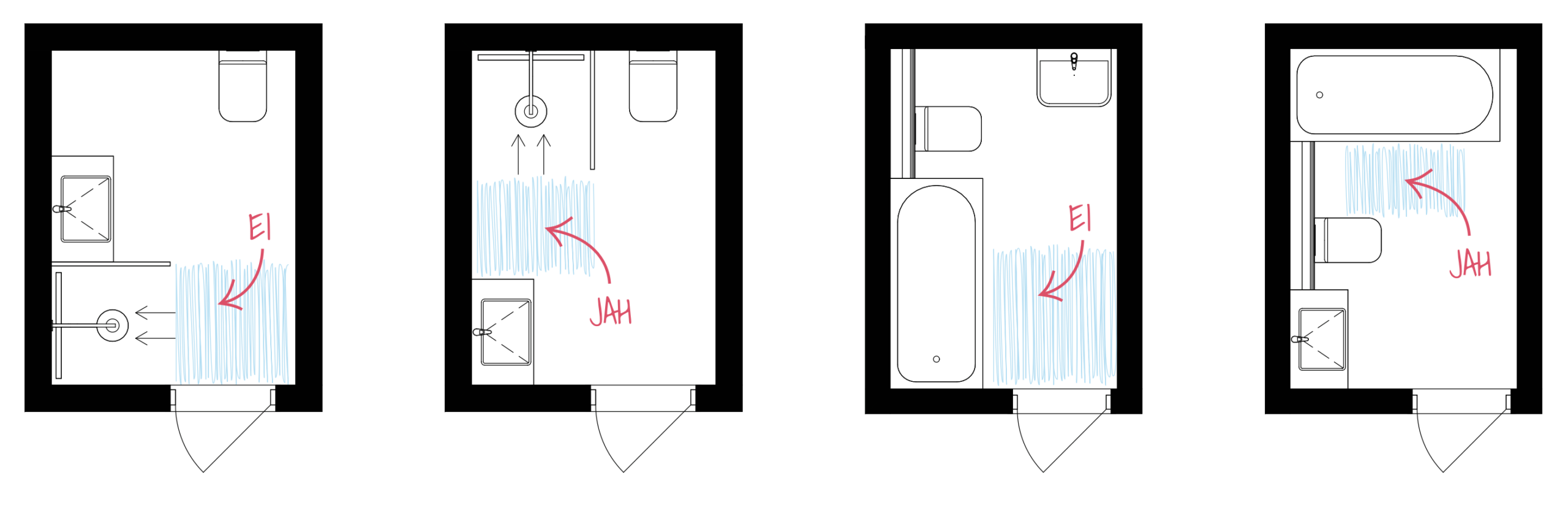
Wet area in front of the shower and bathtub
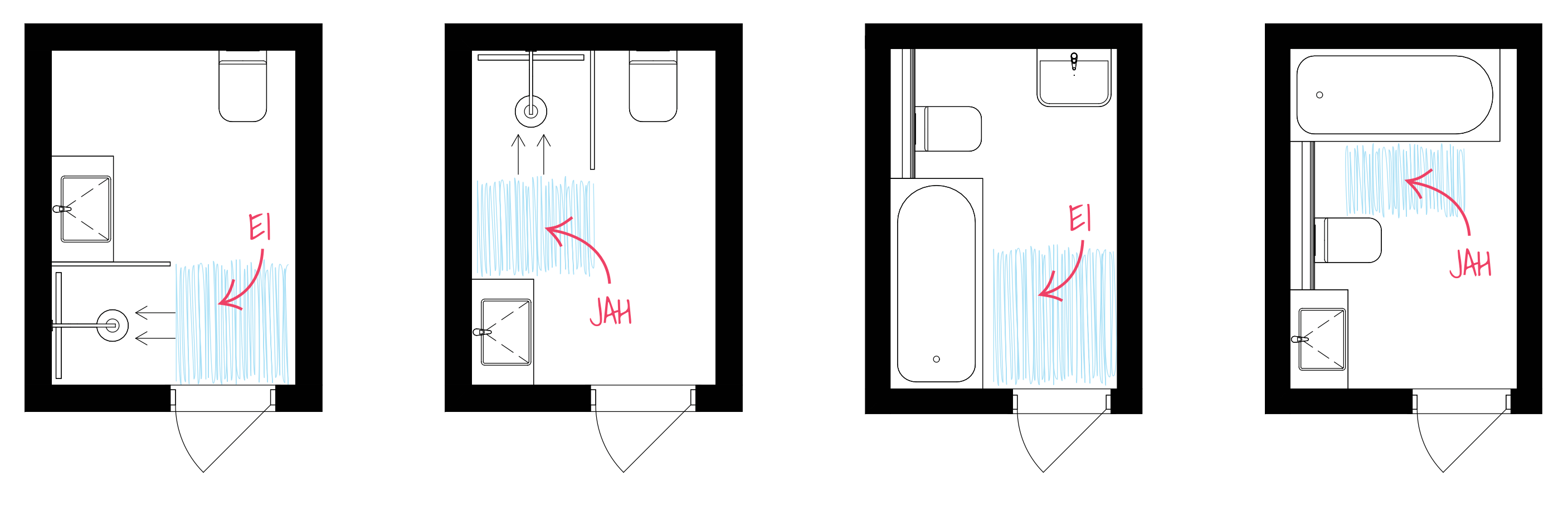
When stepping out of the shower or bathtub, the floor can get more or less wet. If someone then enters the same bathroom to wash their hands and leaves with wet socks, it’s not the most pleasant feeling. If this happens repeatedly, it can become a source of family disputes. Therefore, whenever possible, the bathtub or shower should be positioned further from the bathroom door, so that access to the more frequently used sink and toilet does not go through the bathtub/shower area. Additionally, this can extend the door’s lifespan, as it won’t come into contact with water.
Storage space in the home
When planning a new home, it is important to assess the number of items that need to fit in the home together with you and your family. A storage room or utility room, which can also accommodate shelves for storing items, becomes especially important for families with more members and/or for those who have a lot of hobby equipment. When moving to a new home, you should evaluate the space in your current cabinets and decide how much additional storage space would be optimal.
Many apartments have a more compact layout and a separate storage room may not be available. Carefully review the layout and consider whether additional storage space can be created using smart furniture. For example, in homes with high ceilings, cabinets placed closer to the ceiling can provide space for items that are not used daily. Additional storage can be created in the children’s room, but also in the master bedroom, for instance by choosing a bed with drawers underneath.
Thoughtful furniture arrangement in children’s rooms
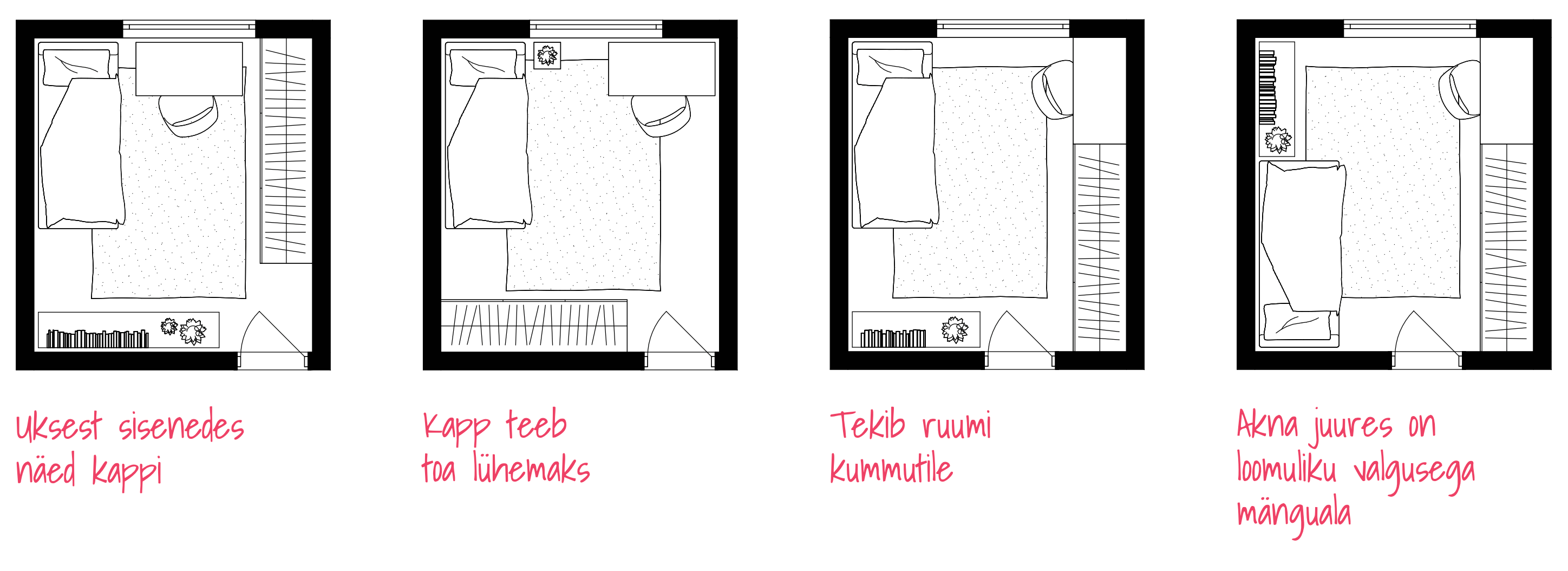
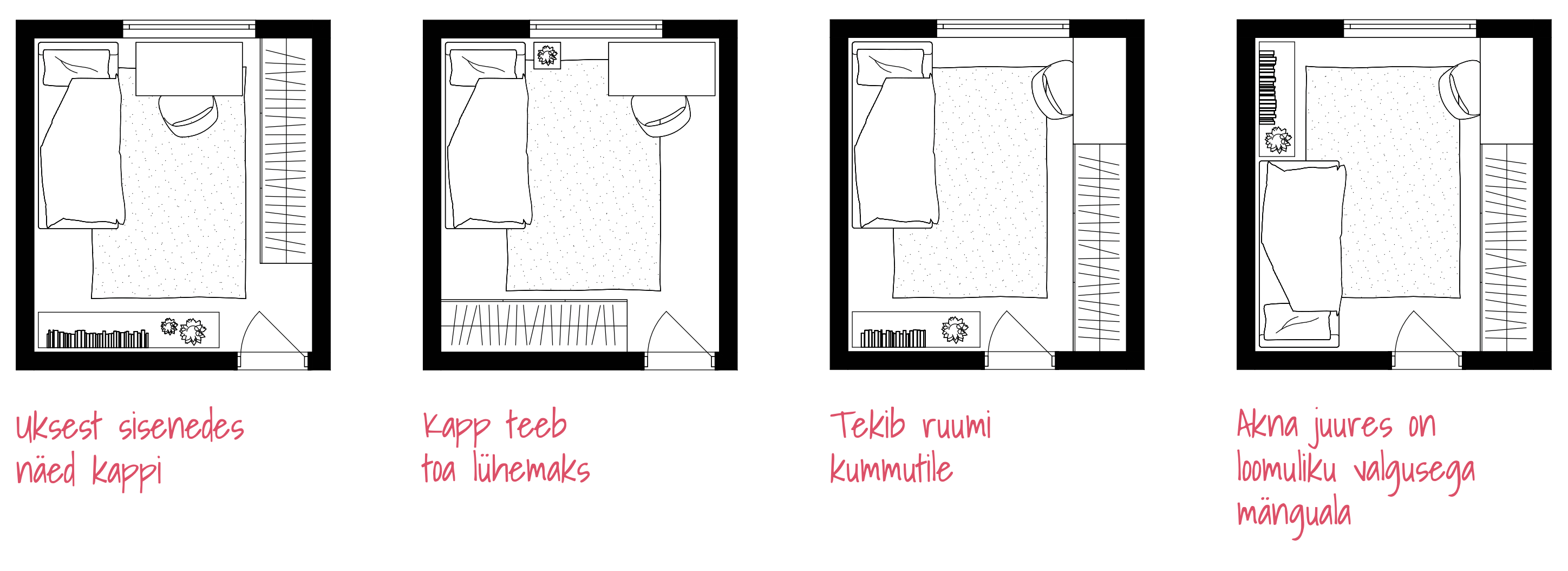
When planning a home, it is smart to carefully consider the placement of furniture in children’s rooms as well. It is not enough to just place the bed, wardrobe and desk somewhere. Whenever possible, they should be positioned in their exact locations, as lighting and electrical planning for the room will be based on this arrangement.
When placing the desk, keep in mind which hand your child writes with: for a left-handed child, natural light should come from the right and for a right-handed child, from the left.
In the shown rooms, the door has been repositioned. Placing the wardrobe behind the door is visually appealing, as the wardrobe does not become the central element of the room. At the same time, the layout on the left is sensible for elongated rooms, as it makes the room feel more spacious.
In addition to your own needs, consider your new home as an investment: if you might want to sell it after some time, is the layout suitable for others as well? For example, in newer buildings, 4–5-room homes often have a separate WC or even two. So, even if you are used to having just one bathroom with a toilet, you should consider multiple for the sake of maintaining the property’s liquidity.
To find a layout solution suitable for yourself and your family, it is sensible to write down your wishes and needs and then assess their importance. When putting wishes on paper, it is also useful to analyze what the alternatives to the ideal option would be. Below is an example from one family:

Liven’s interior architects have developed layouts where the entire space is used optimally. Many layouts offer several alternatives: for example, you can choose a utility room instead of a sauna, or a shower instead of a bathtub, etc. If your family has more specific needs, other modifications are also possible, which our interior architects can help plan. Depending on the stage of the project, the scope of possible changes may vary.
Before construction begins, you can choose between Liven’s designed layouts and if desired, make additional modifications to suit your preferences. At this stage, it is generally possible, for example, to combine two apartments or change the location and size of rooms within a single apartment. The positions of shafts and load-bearing walls cannot be changed. Occasionally, an opening in a load-bearing wall can be made if done at an early stage.